



Starting with cryptocurrency can feel confusing at first. There are new terms, unfamiliar apps and plenty of warnings about scams and hacks. Many beginners rush into buying crypto but forget one important thing – where to store it safely. That’s where a crypto wallet comes in.
This guide is written for people who are completely new to crypto. If you want a clear, stress-free explanation and a safe way to begin, you’re in the right place. By the end of this article, you’ll understand how crypto wallets work, what to look for as a beginner and how to start with confidence.
What Is a Crypto Wallet?
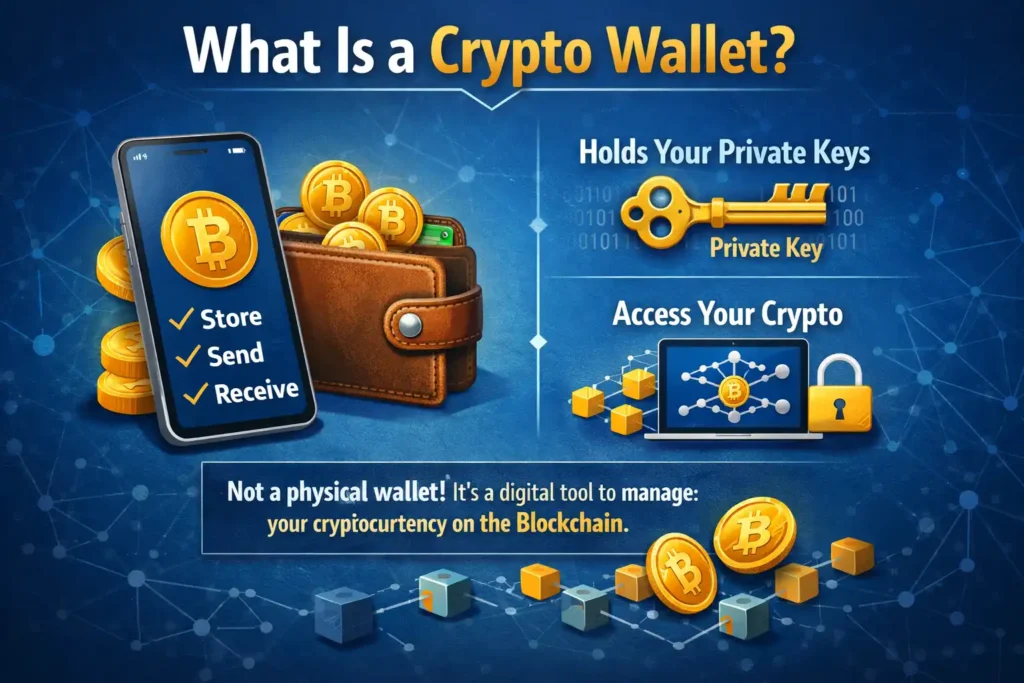
A crypto wallet is a tool that helps you manage your digital assets. It allows you to send, receive and store cryptocurrency securely. Unlike a physical wallet, it doesn’t actually hold coins. Instead, it stores private keys – special codes that prove you own your crypto.
Think of it like online banking. Your money isn’t inside the app, but the app gives you access to it. In crypto, your wallet gives you control over your funds on the blockchain.
Why Choosing the Right Wallet Matters for Beginners
Many beginners lose money not because crypto is unsafe, but because they don’t understand how wallets work. Using the wrong wallet or ignoring security steps can lead to serious problems.
A beginner-friendly wallet should:
- Be easy to understand
- Protect your funds properly
- Offer simple backup and recovery
- Help you avoid common mistakes
When you start with the right wallet, everything else becomes easier.
Different Types of Crypto Wallets (Made Simple)
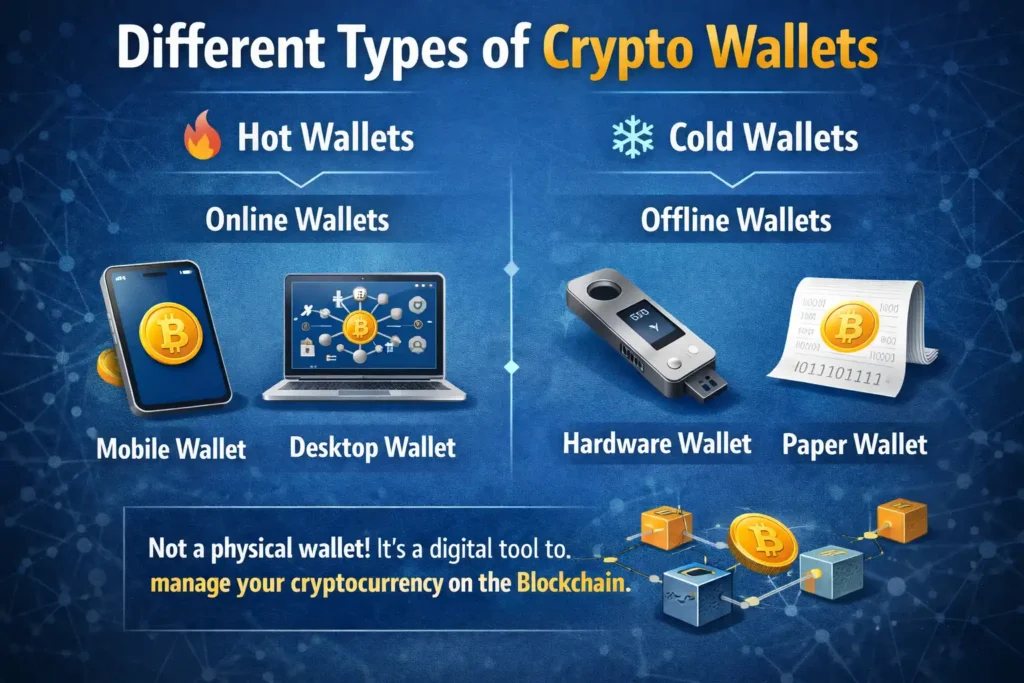
There are two main categories of crypto wallets hot wallets and cold wallets. Knowing the difference helps you choose what fits your needs.
Hot Wallets (Online Wallets)
Hot wallets stay connected to the internet. They are commonly used on mobile phones or computers.
Why beginners like them:
- Easy to set up
- Simple to use
- Great for small amounts and daily use
The trade-off is that they require careful security habits.
Cold Wallets (Offline Wallets)
Cold wallets stay offline most of the time. They are often used for long-term storage.
Why people use them later:
- Strong protection
- Lower risk of online attacks
Cold wallets are very secure, but beginners often find them less convenient at first.
Hot Wallet vs Cold Wallet: Quick Comparison
| Feature | Hot Wallet | Cold Wallet |
| Internet access | Yes | No |
| Ease of use | High | Medium |
| Security level | Good | Very high |
| Beginner friendly | Yes | Not ideal at first |
| Best use | Daily transactions | Long-term storage |
Most beginners start with a hot wallet and move to cold storage once they gain experience.
What Beginners Should Look for in a Crypto Wallet
Not every wallet is designed for new users. Some are built for advanced traders and can feel overwhelming. A good beginner wallet focuses on clarity and safety.
Simple Design
Clear menus and easy navigation make a huge difference. You shouldn’t need technical knowledge to use a wallet.
Strong Security Features
Look for things like:
- Password protection
- Recovery phrases
- Biometric login (fingerprint or face ID)
Security should feel reassuring, not complicated.
Support for Multiple Coins
Beginners often explore different cryptocurrencies. A wallet that supports more than one coin saves time and effort.
Clear Backup and Recovery
Losing access to your wallet can be scary. Good wallets explain recovery steps clearly and remind users to back up safely.
Common Wallet Mistakes Beginners Should Avoid
Learning what not to do is just as important.
Saving Recovery Phrases Online
Storing recovery phrases in email or cloud apps increases risk. It’s safer to write them down and keep them offline.
Downloading Wallets From Unofficial Sources
Fake apps are common in crypto. Always download wallets from official websites or app stores.
Ignoring Security Updates
Updates often fix security issues. Skipping them can leave your wallet vulnerable.
Avoiding these mistakes helps protect your crypto from the start.
How to Set Up a Wallet the Right Way
Setting up your wallet carefully takes only a few minutes but saves you from future problems.
- Download the wallet from a trusted source
- Create a strong password
- Write down the recovery phrase
- Store the phrase somewhere safe and offline
- Enable extra security options if available
Once setup is complete, you’re ready to begin.
First Steps After Creating Your Wallet
Start slowly. There’s no need to rush.
- Send a small test transaction
- Learn how to receive crypto
- Explore the wallet settings
Practicing with small amounts builds confidence and reduces stress.
Mobile vs Desktop Wallets for Beginners
Mobile Wallets
Mobile wallets are popular because they’re easy to use and always available. They’re great for beginners who want convenience.
Desktop Wallets
Desktop wallets give you more control but require access to a computer. Some beginners prefer them for better focus and organization.
For most people starting out, mobile wallets feel more natural.
Why Learning While Using a Wallet Matters
The best beginner wallets don’t just store crypto – they teach users along the way. Helpful tips, warnings and explanations reduce mistakes and build understanding.
This learning process is what makes a wallet truly beginner-friendly.
Growing Safely After You Get Comfortable
As you gain experience, you may explore more features like swaps or staking. Take your time and research before using anything new.
- Don’t invest more than you can afford
- Keep your security habits strong
- Learn before clicking
Crypto rewards patience and caution.
Frequently Asked Questions (FAQs)
The best crypto wallet for beginners is one that is simple, secure andeasy to recover if something goes wrong.
Yes, crypto wallets are safe when used correctly and downloaded from trusted sources.
Yes, hot wallets are usually easier for beginners to understand and use.
You can recover your wallet using your recovery phrase if it’s stored safely.
Many wallets support multiple cryptocurrencies, which is convenient for beginners.
Many reliable wallets are free. Price doesn’t always equal quality.
Back up once during setup and keep the recovery phrase safe.
No. Modern wallets are designed for everyday users.
Final Thoughts
Getting started with crypto doesn’t have to be stressful. With the right wallet and basic security habits, beginners can explore digital assets safely and confidently. A wallet should feel supportive, not confusing.
Take your time, stay curious and focus on learning. When you choose wisely and move carefully, crypto becomes much easier to manage – and far less intimidating.
