


Getting into crypto is exciting. You hear stories about people earning big, discovering new projects, and being part of the future of money. But here’s the part many beginners ignore at first: security.
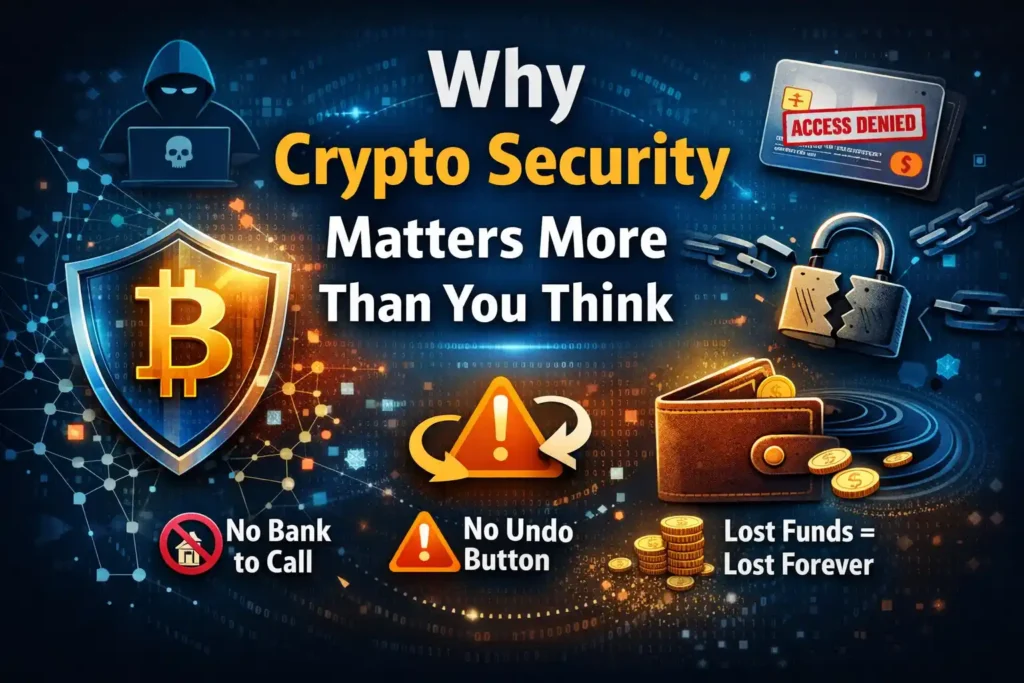
Before profits, charts, or trading strategies, you need safety. Crypto doesn’t work like a bank. If you lose access, get hacked, or send funds to the wrong place, there’s usually no “undo” button. That’s why understanding crypto security basics for beginners is not optional, it’s essential.
This guide is written for real beginners. No tech-heavy language. No fear tactics. Just clear, practical advice you can actually follow. By the end, you’ll know how to keep crypto safe for beginners, avoid common mistakes, and protect your money with confidence.
Why Crypto Security Matters More Than You Think
In traditional banking, if someone steals your card, you can call the bank. In crypto, you are the bank.
That means:
- You control your funds
- You are responsible for your keys
- You must protect your access
Hackers don’t attack blockchains directly. Instead, they target people, especially beginners. Weak passwords, fake websites, and careless clicks cause most losses.
This is why following solid crypto safety tips for beginners early can save you stress, money, and regret later.
Understanding the Basics: How Crypto Actually Works
Before we talk security, let’s quickly clear up a few key ideas.
What Is a Crypto Wallet?
A crypto wallet doesn’t store coins. It stores private keys that prove ownership of your crypto on the blockchain. There are two main types of wallets beginners should understand: hot wallets (connected to the internet) and cold wallets (offline storage). If you’re unsure which one is right for you, this simple guide on hot wallets vs cold wallets explains the differences clearly.
Your security depends on how you protect those keys.
What Is a Private Key?
A private key (or recovery phrase) is the master password to your crypto. Anyone who has it can take your funds.
This single fact explains most beginner losses.
Crypto Security Basics for Beginners You Must Know
Let’s start with the fundamentals. These rules apply to everyone, no matter how small your investment is.
1. Never Share Your Recovery Phrase
No support team, no admin, no friend should ever ask for it. If they do, it’s a scam—every time.
Write it down on paper. Store it offline. Never save it in screenshots, emails, or cloud storage.
2. Use Strong, Unique Passwords
Do not reuse passwords from email or social media. Crypto accounts should always have:
- Long passwords
- Random characters
- No personal info
A password manager can help, but choose a trusted one.
3. Enable Two-Factor Authentication
Always turn on 2fa using an authenticator app, not sms. This adds a strong second layer of protection.
These are the true crypto security basics for beginners, and skipping them is risky.
Crypto Wallet Security Tips for Beginners
Your wallet is the heart of your crypto journey. Securing it properly is non-negotiable.
Choose the Right Wallet
For beginners, start with reputable wallets that are widely used and reviewed. Avoid unknown apps promising free rewards.
Good wallets focus on:
- Security first
- Clear recovery options
- Regular updates
Separate Storage for Large Amounts
If your crypto value grows, don’t keep everything in one wallet. Many experienced users:
- Keep small amounts in hot wallets
- Store larger amounts in cold wallets
This is one of the smartest crypto wallet security tips for beginners.
Beginner Crypto Security Guide: Avoiding Common Scams
Scammers don’t need advanced tools. They use psychology.
Phishing Attacks
Fake websites and emails look real. They copy popular exchanges and wallets.
Always:
- Bookmark official sites
- Double-check urls
- Never click random links
Fake Giveaways
“No one gives free crypto.”
If a post says “send 1, get 2 back,” it’s a scam.
Impersonation Scams
Scammers pretend to be support staff on social media. Real platforms never message first.
Learning these patterns is a core part of any beginner crypto security guide.
How to Keep Crypto Safe for Beginners in Daily Use
Security isn’t a one-time setup. It’s a habit.
Double-Check Every Transaction
Blockchain transactions are final. Always verify:
- Wallet address
- Network type
- Amount
Send a small test transaction first when possible.
Keep Software Updated
Wallets and devices need updates for security patches. Outdated software is an easy target.
Use a Secure Device
Avoid managing crypto on public computers or shared phones. Ideally:
- Use a personal device
- Lock it with a password
- Enable device encryption
These daily habits help beginners stay safe long term.
Exchanges vs Wallets: What Beginners Should Know
Many beginners keep crypto on exchanges, but understanding the difference between wallets and exchanges is essential before deciding where to store your funds.
Exchange Risks
- You don’t control private keys
- Platforms can be hacked
- Withdrawals can be frozen
Best Practice
Use exchanges for trading. Move funds to a wallet you control for storage.
This simple step improves safety dramatically and is often overlooked in crypto safety tips for beginners.
Cold Storage: When and Why It Matters
Cold storage means keeping crypto offline. Hardware wallets are the most common option.
Why Cold Storage Is Safer
- Not connected to the internet
- Resistant to malware
- Ideal for long-term holding
You don’t need one on day one. But as your investment grows, cold storage becomes worth considering.
Social Media and Crypto: A Risky Mix
Most crypto scams start on social platforms.
Stay Cautious
- Don’t trust dms
- Verify accounts
- Avoid hype-driven decisions
If something feels urgent or emotional, pause. Scammers rely on pressure.
Building a Security-First Mindset
SSecurity isn’t about fear. It’s about control.
When you prioritize safety:
- You trade with confidence
- You sleep better
- You avoid costly mistakes
The smartest investors don’t rush. They protect first, profit second.
That mindset alone separates beginners who survive from those who quit early.
People Asked About this
Never share your recovery phrase with anyone. It is the only key to your funds and cannot be recovered if lost.
Wallets give you full control of your keys, which is safer long term. Exchanges are better for trading, not storage.
Always verify websites, avoid giveaways, and never trust unsolicited messages claiming to be support.
Yes. 2fa adds an extra layer of protection and significantly reduces the risk of account compromise.
Yes, but they are better suited once you hold larger amounts. They offer strong offline security.
You lose access permanently. There is no reset option in crypto.
It can be safe if the phone is secure, updated, and not shared. Avoid public or rooted devices.
Review it regularly, especially after updates, new devices, or large transactions.
Final Thoughts: Safety Is the Real Investment
Crypto offers freedom, but freedom comes with responsibility. Beginners who focus only on profits often learn security the hard way. Those who learn crypto security basics for beginners early build a stronger foundation.
Think of security as your first investment. Protect your wallet. Protect your keys. Build good habits now, and your crypto journey will be smoother, safer, and far more rewarding. In crypto, profits come and go, but safety is what keeps you in the game
