DeFi lost approximately $1.1 billion to hacks and exploits in 2023. In 2024, losses exceeded $590 Million despite stronger security practices.
The yields are real, but so are the risks.
When I first explored DeFi beyond the major protocols, I made the same mistake many beginners make: chasing the highest APY without asking where the returns came from. I got lucky. Many others didn’t.
That’s when I realized choosing a safe DeFi platform isn’t about avoiding DeFi; it’s about knowing what to evaluate before depositing your funds.
In this guide, you’ll learn:
- The 10 key factors to evaluate any DeFi platform
- The red flags that signal higher risk
- The tools professionals use to research protocols before investing
Whether you’re evaluating a lending protocol, liquidity pool, or yield optimizer, this framework will help you make more informed decisions.
Why Is Choosing a Safe DeFi Platform Important?
Choosing the wrong DeFi platform can result in permanent loss of funds. Unlike traditional finance, Decentralized Finance (DeFi) doesn’t provide deposit insurance, centralized customer support, or guaranteed fund recovery after a hack or protocol failure.
Several high-profile incidents show why evaluating a protocol before investing is essential:
- Ronin Network lost over $624 million in one of the largest crypto exploits.
- Euler Finance suffered a $197 million flash loan attack in 2023.
- Curve Finance experienced a smart contract exploit that affected multiple liquidity pools.
- Industry reports show billions of dollars have been lost to DeFi exploits, hacks, and rug pulls in recent years.
High returns can also be misleading. A high APY doesn’t automatically mean a platform is safe.
- Unsustainably high yields often rely on token emissions rather than real protocol revenue.
- Newly launched protocols may use high APYs to attract liquidity before proving their security.
- Always understand where the yield comes from, not just how much it offers.
What Risks Should You Know Before Using DeFi?
DeFi platforms can expose users to technical, financial, and regulatory risks. Understanding the basics helps you evaluate a protocol before investing.
The most common risks include:
- Smart contract vulnerabilities — Bugs in protocol code that attackers can exploit.
- Rug pulls — Developers abandon a project after attracting user funds.
- Oracle manipulation — Compromised price feeds trigger incorrect trades or liquidations.
- Impermanent loss — Liquidity providers lose value when token prices change.
- Regulatory uncertainty — Changing regulations may affect protocol access or supported assets.
These risks of using defi platforms vary by protocol. The evaluation framework below will help you identify potential warning signs before depositing funds.
10 Factors to Evaluate a Safe DeFi Platform
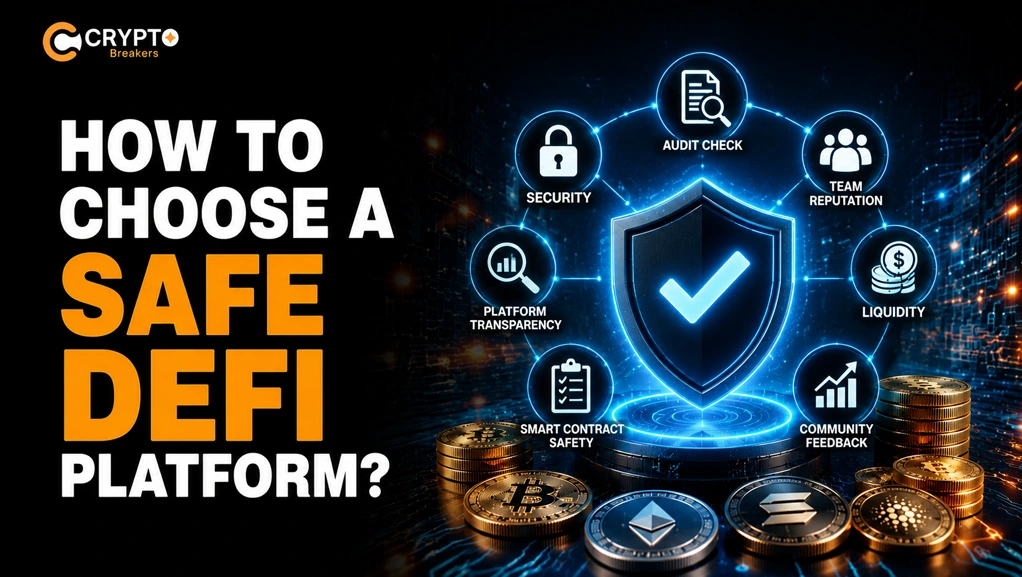
No single metric determines whether a DeFi platform is safe. Evaluating multiple factors, such as smart contract security, TVL, governance, and protocol history, provides a more reliable picture of a protocol’s overall risk.
Use the table below as a quick checklist before reviewing each factor in detail.
| Factor | What to Check | Good Sign | Warning Sign |
|---|---|---|---|
| Smart Contract Audits | Audit quality and coverage | Multiple audits by reputable firms | No audit or unknown auditor |
| Protocol Track Record | Age and security history | Established protocol with a proven history | Newly launched with limited history |
| Total Value Locked (TVL) | TVL trend and liquidity | Stable or consistent growth | Sharp spikes or rapid decline |
| Team Transparency | Team identity and experience | Public team with an active track record | Anonymous or inactive developers |
| Open-Source Code | Code availability and activity | Verified contracts and active GitHub | Closed or unverified code |
| Governance | Decision-making process | Active DAO with community participation | Centralized admin control |
| Tokenomics | Yield source and sustainability | Revenue-backed, sustainable rewards | Inflation-driven or unrealistic APYs |
| Bug Bounty Program | Security incentive program | Active bounty on Immunefi or similar | No public bug bounty |
| DeFi Insurance | Insurance availability | Coverage from providers like Nexus Mutual or Sherlock | No insurance options |
| Regulatory Transparency | Policies and documentation | Clear terms and supported regions | Limited or unclear information |
1. Smart Contract Audits
A smart contract audit is an independent security review of a protocol’s code that helps identify vulnerabilities before deployment. While audits don’t guarantee complete security, they’re one of the strongest indicators of a protocol’s reliability.
What Should You Check in a Smart Contract Audit?
Before trusting a DeFi protocol, review these key factors:
- Audit coverage — Prefer protocols with multiple independent audits, especially after major upgrades.
- Auditor reputation — Look for established firms such as Trail of Bits, OpenZeppelin, Consensys Diligence, Hacken, CertiK, or Spearbit.
- Audit recency — Ensure the latest version of the protocol has been audited, not just the initial release.
- Public reports — Reputable projects publish audit reports along with the vulnerabilities identified and how they were resolved.
Where to verify: Check the protocol’s documentation, the auditor’s official website, or verified smart contracts on Etherscan.
2. Protocol Track Record
A protocol’s track record shows how well it has handled market downturns, security incidents, and long-term operations. Established protocols with a proven history are generally more trustworthy than newly launched projects.
What Should You Check in a Protocol’s Track Record?
Before investing, evaluate these key indicators:
- Protocol age — Look for platforms that have operated for two or more years with a stable history.
- Security history — Review past exploits and how the team responded. Transparent communication and user compensation are positive signs.
- Governance activity — Check whether the protocol has managed upgrades, proposals, and market events through active DAO governance.
- Development activity — Consistent updates and an active development team indicate ongoing maintenance.
Where to research: Review Rekt News for exploit history, DefiSafety for security ratings, and governance platforms like Snapshot or Tally for community proposals and voting activity.
3. Total Value Locked (TVL)
Total Value Locked (TVL) is the total value of crypto assets deposited in a DeFi protocol. It reflects a protocol’s liquidity, adoption, and overall market confidence, although it shouldn’t be used as the only measure of safety.
What Should You Check in a Protocol’s TVL?
Review these indicators before investing:
- TVL trend — Stable or steadily growing TVL usually indicates sustained user confidence.
- Sudden changes — Sharp increases or rapid declines may signal incentive-driven liquidity or declining trust.
- Protocol maturity — Established protocols with consistently high TVL are generally more battle-tested than newly launched projects.
- TVL-to-market cap — Comparing a protocol’s TVL with its market capitalization can provide additional context about its valuation.
Where to verify: Use DeFiLlama, the industry-standard platform for tracking TVL across DeFi protocols and blockchain networks.
Tip: Don’t rely on a single snapshot. Compare 7-day, 30-day, and 90-day TVL trends to better understand how a protocol is performing over time.
4. Team Transparency
A protocol’s team is responsible for its development, security, and governance. Transparent and experienced teams generally inspire more confidence than projects with little or no public information.
What Should You Check About a DeFi Team?
Review these factors before investing:
- Team identity — Check whether founders or core developers are publicly known or have a credible track record.
- Development activity — Look for active code contributions on GitHub and regular protocol updates.
- Industry experience — Review previous projects, technical expertise, and reputation within the crypto ecosystem.
- Community engagement — Active communication through governance forums, blogs, or social channels is a positive sign.
- Investor backing — Support from firms like a16z crypto, Paradigm, or Multicoin Capital can provide additional credibility, though it isn’t a guarantee of safety.
Where to verify: Review the project’s GitHub repository, official documentation, governance forum, LinkedIn profiles (if public), and reputable crypto investors or ecosystem partners.
5. Open-Source Code
Open-source code allows anyone to inspect and verify a protocol’s smart contracts. Public, verifiable code increases transparency and helps the community identify security issues before they can be exploited.
What Should You Check in Open-Source Code?
Review these indicators before using a DeFi protocol:
- Contract verification — Ensure smart contracts are verified on Etherscan or the relevant blockchain explorer.
- GitHub activity — Look for an active public repository with regular commits and multiple contributors.
- Code origin — If the protocol is a fork of Uniswap, Aave, or Compound, check whether any security-critical changes were introduced.
- Ongoing maintenance — Recent updates, pull requests, and issue tracking indicate active development.
Where to verify: Check verified contracts on Etherscan, the protocol’s GitHub repository, and its official documentation.
Tip: Even if you don’t read code, you can still confirm whether the contracts are verified, the repository is public, and the project is actively maintained.
6. Governance and Decentralization
Governance determines who controls a DeFi protocol and how important decisions are made. Protocols with decentralized governance and transparent decision-making generally carry lower centralization risk.
What Should You Check in a Protocol’s Governance?
Review these factors before investing:
- Admin controls — Check whether a single entity can upgrade contracts, pause the protocol, or control user funds.
- Multi-signature wallets — If admin privileges exist, they should be protected by a multi-sig wallet rather than one individual.
- DAO governance — Look for protocols where token holders vote on upgrades and proposals through a Decentralized Autonomous Organization (DAO).
- Voting distribution — Ensure governance power isn’t concentrated among a small number of wallets.
- Timelock contracts — Major protocol changes should include a timelock, giving users time to review or exit before updates take effect.
Where to verify: Review the protocol’s documentation, governance platforms such as Snapshot or Tally, and on-chain governance dashboards to understand how decisions are made and who controls the protocol.
7. Tokenomics and Yield Sustainability
A DeFi protocol’s yield should be backed by real economic activity, not just token emissions. Understanding where rewards come from helps you identify whether a protocol’s returns are sustainable.
What Should You Check in a Protocol’s Tokenomics?
Review these factors before investing:
- Yield source — Prefer rewards generated from lending interest, trading fees, or staking rewards, rather than token inflation alone.
- Token emissions — Check whether governance token rewards are sustainable or likely to decline as emissions decrease.
- APY level — Extremely high APYs often indicate higher risk or unsustainable incentive programs.
- Protocol revenue — Compare fee-generated revenue with reward payouts to see whether the protocol can support long-term yields.
Where to verify: Use DeFiLlama to review protocol revenue, token emissions, and the Real Yield filter, which highlights protocols generating rewards from actual revenue instead of inflationary token incentives.
8. Bug Bounty Programs
A bug bounty program rewards security researchers for reporting vulnerabilities before attackers can exploit them. An active program shows a protocol is committed to improving its security.
What Should You Check in a Bug Bounty Program?
Review these factors before investing:
- Active program — Choose protocols with a public bug bounty. No bounty program is a warning sign.
- Bounty amount — Larger protocols often offer rewards of $1 million or more for critical vulnerabilities. A protocol with billions in TVL offering only a small bounty may not prioritize security.
- Platform — Look for programs hosted on Immunefi, the leading Web3 bug bounty platform.
- Payout history — Check whether the protocol has successfully rewarded researchers for valid vulnerability reports.
Where to verify: Search the protocol on Immunefi to review its bug bounty program, maximum reward, and previous payouts.
9. DeFi Cover (Insurance)
DeFi cover provides financial protection against smart contract exploits. Unlike traditional insurance, most decentralized providers offer cover, where claims are assessed through community governance or protocol-specific security models.
What Should You Check About DeFi Cover?
Before depositing funds, review these factors:
- Coverage scope — Most cover protects against smart contract exploits, but not user error, impermanent loss, or market price declines.
- Cover provider — Look for protection from established providers such as Nexus Mutual, Sherlock, or InsurAce.
- Claim process — Nexus Mutual uses community voting to approve claims, while Sherlock primarily provides protocol cover backed by security experts.
- Coverage availability — If a protocol isn’t supported by major cover providers, it may indicate that its smart contracts are considered too risky to underwrite.
- Cost — Cover premiums typically range from 1% to 5% of the protected amount per year, depending on the protocol and risk level.
Where to verify: Search the protocol on Nexus Mutual, Sherlock, or InsurAce to check whether cover is available, what risks are included, and the current premium.
10. Regulatory Transparency
A protocol’s approach to regulatory compliance can affect its long-term stability and availability. While regulation doesn’t guarantee security, transparent protocols are generally better prepared for changing legal requirements.
What Should You Check About Regulatory Transparency?
Review these factors before investing:
- Terms of Service — Look for clear documentation explaining how the protocol operates and complies with applicable regulations.
- Geographic restrictions — Restrictions in certain jurisdictions often indicate regulatory awareness rather than a security concern.
- Sanctions compliance — Some protocols screen wallet addresses against OFAC sanctions lists to meet legal obligations.
- Regulatory engagement — Protocols that communicate with regulators or industry groups may face lower operational uncertainty.
- Legal structure — Foundations, nonprofits, or legal entities supporting a DAO can improve accountability and regulatory clarity.
Where to verify: Review the protocol’s official documentation, Terms of Service, governance forum, and foundation or DAO information for details on its regulatory approach.
Best Tools to Research a DeFi Platform
These are the tools professional DeFi investors and security researchers use to evaluate protocols before depositing:
| Tool | Purpose | Where to Access |
|---|---|---|
| DeFiLlama | TVL tracking, real yield filtering, protocol comparisons | defillama.com |
| Immunefi | Bug bounty listings and payout history | immunefi.com |
| Etherscan | Smart contract verification and transaction history | etherscan.io |
| CertiK Skynet | Automated security scores and audit tracking | skynet.certik.com |
| DefiSafety | Manual protocol safety ratings with detailed methodology | defisafety.com |
| Rekt News | Historical DeFi exploit database and post-mortems | rekt.news |
| Dune Analytics | On-chain metrics, governance participation, wallet distribution | dune.com |
| Chainalysis | On-chain risk intelligence and compliance data | chainalysis.com |
| Snapshot / Tally | Governance proposal history and voter participation | snapshot.org / tally.xyz |
| GitHub | Open source code activity and developer engagement | github.com |
How to use them together:
Start with DeFiLlama for TVL and yield data. Cross-reference with DefiSafety for a safety score. Check Rekt News for any exploit history. Verify the audit on CertiK Skynet or the audit firm’s website. Check Immunefi for bug bounty details. Verify the contract on Etherscan. Review governance on Snapshot or Tally.
This full research process takes 20-30 minutes per protocol — a reasonable investment before depositing significant capital.
People Also Ask About Safety Factors for DeFi Platform
Can Any DeFi Platform Be 100% Safe?
No. Every DeFi platform carries risks, including smart contract vulnerabilities, market volatility, and governance issues. The goal is to reduce risk by choosing established, well-audited protocols.
Is a High TVL Enough to Trust a Platform?
No. A high Total Value Locked (TVL) indicates adoption but doesn’t guarantee safety. Always evaluate audits, protocol history, governance, and team transparency alongside TVL.
How Can I Verify a DeFi Audit?
Check the audit on the security firm’s official website. Reputable firms such as Trail of Bits, OpenZeppelin, and Spearbit publish completed audit reports publicly.
Which DeFi Platform Is Safest for Beginners?
Established protocols like Aave, Compound, and Sky Protocol (Sky Savings Rate) are good starting points because they offer strong security, multiple audits, and simple earning options.
Should I Buy DeFi Cover?
For larger deposits, it can be worthwhile. Providers like Nexus Mutual, Sherlock, and InsurAce offer cover against eligible smart contract exploits.
How Much Should I Invest in a New DeFi Platform?
Start with a small amount you can afford to lose. Test the protocol first, then increase your investment only after gaining confidence.
What Were the Biggest DeFi Exploits?
Major incidents include the Ronin Network ($625M), Poly Network ($611M), Wormhole ($320M), and Nomad Bridge ($190M) exploits, highlighting the importance of audits and due diligence.
What 10 Minutes of Research Before Every Deposit Has Saved Me
I never deposit into a DeFi protocol without checking at least the first five factors on this list. Not because I’m overly cautious, but because even experienced investors lose money when they skip proper due diligence.
This framework won’t eliminate risk; nothing can. It helps you take informed, calculated risks rather than blindly chasing high yields.
Trusted protocols like Aave, Curve, Lido, and Sky Protocol earned their reputation through security, transparency, and resilience, not aggressive marketing or unrealistic APYs.
Use this checklist before every deposit. Skipping it once could become the most expensive mistake you make.